

Why I asked the European Parliament to do breathwork
How to Create New Rituals for Democracy

Last week I asked a room full of politicians and democracy experts to close their eyes and breathe.
As my panel on narratives for democracy in one of the European Parliament’s committee meeting rooms started, I didn’t plan on leading a moment of breathwork. But there was a big panel, sharing a lot of scary stuff about the state of democracy in the world. I decided I wanted people to remember my part, and I would do it by doing something to make them experience my message, not just hear it.
I also decided to practice what I preach. I have been saying that institutions need to embrace insights from brain science that make humans function better (I also did a longer version of the sigh and explanation in that speech).
How to create new rituals for democratic renewal - a 3-question process
If you can answer these three questions, you will have the beginnings of new prototypes for rituals that will give people an experience of democracy.
Vision: What does a world with more vibrant democracy look like?
Values: What are the core beliefs that underpin democracy?
Voices: What does it look like for everyday people to do democracy? (tip. not just voting or protesting!)
Explainer:
Step 1. Vision:
When we articulate a clear vision, we start to see the seeds of change are already there. We can give them sunlight. The ideas that shape our societies in the next decade will be the ones we activate, repeat, and embody.
Very often, this exercise generates images of community. We can think about the social infrastructure needed for democracy: e.g. public spaces like parks, community centres or libraries. (see for example the work of Civic Square)
Step 2. Values:
We need to reinforce the beliefs that underpin democracy: hope, trust, care. This requires a new vocabulary for talking about democracy.
And we also need to reinforce those beliefs through action. Democracy is not just institutions, it is culture. And people shape culture.
Step 3. Voices:
We can ask what it looks like for people to bring vision and values to life. Those actions are the prototypes on potential new rituals. They are the story-seeds from which new narratives will grow.
We can all contribute to a pro-democracy narrative by sharing stories that show what democracy looks like when it works. Just like fungi or tree roots, democracy does its best work beneath the surface where we don’t notice it.
For example, we can’t just build new media from above, we need to support community journalism, like Cross-Cover the hope-based student culture magazine that uses in-person launch events to get young Hungarians into politics.
More about ritual
Byung-Chul Han: ritual = “symbolic acts” that “represent, and pass on, the values and orders on which a community is based” that allow us to “recognise each other as shared participants in life, in the world”. He says the internet has given us “communication without community”.
Dimitris Xygalatas: rituals imbue our lives with meaning by making certain things special.” “Even if these ritualised practices cannot directly manipulate our environment, they can bring changes in ourselves, and those changes can have real and important effects on our world.”
Sarah Stein Lubrano: action as gateway to movements: “Rather than focusing so closely on debate and discourse, on tweets and op-eds, on coming up with better arguments, we’d do better to organise even the smallest of political actions.” (from her book Don’t Talk about Politics - full review coming soon)
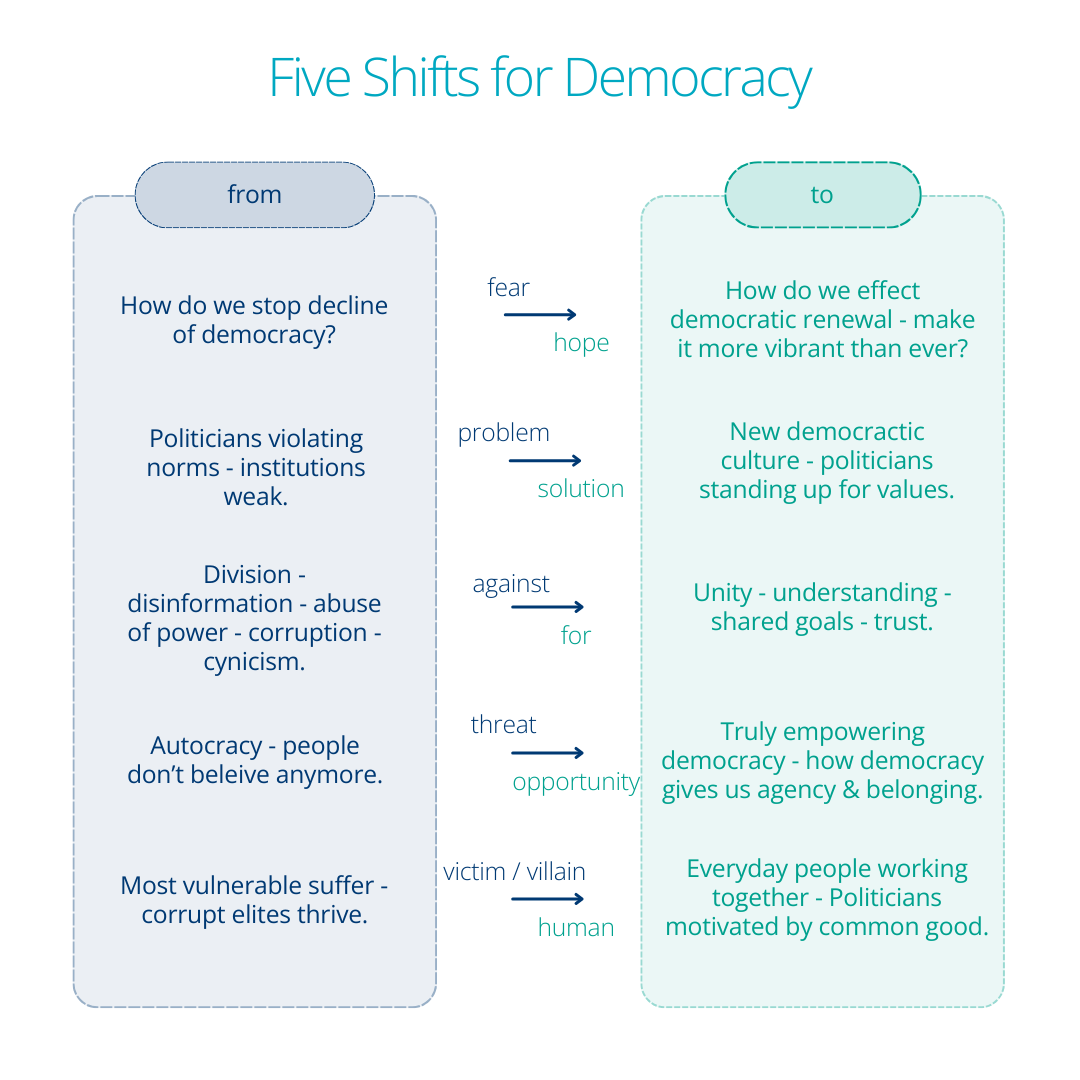
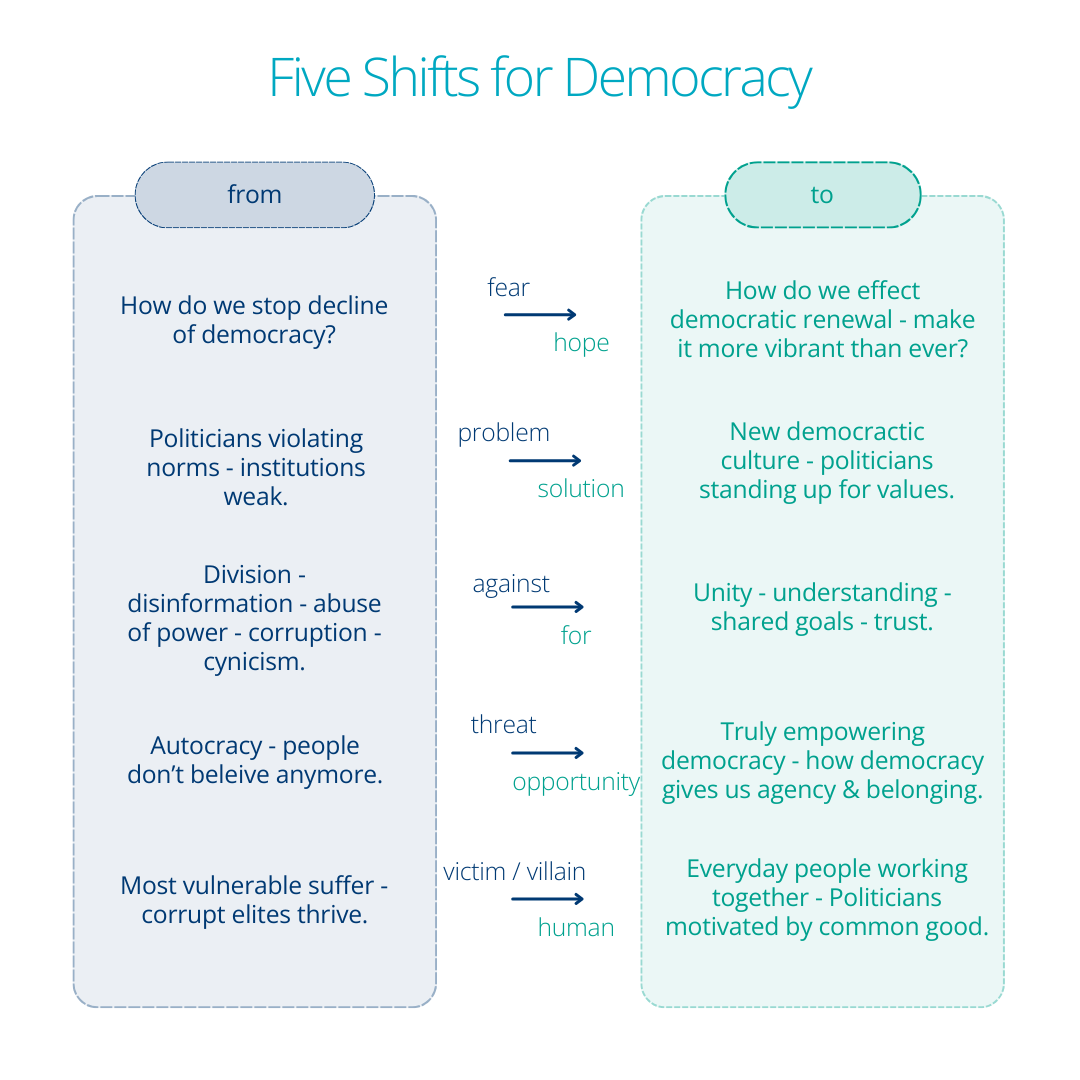
Thought seeds: Practical advice on renewing democracy from philosophers
Jurgen Habermas, who died last week, talked about the importance of a public sphere. In the 19th century, this was café culture. Maybe that’s just what we need in the 21st?
The fact that images of community comes up so much in our visions of democracy is interesting, because Hannah Arendt said the origin of totalitarianism is loneliness. For defending democracy, community is an end in itself.
If you want more about hope-based rituals for democracy, check out the Rewire Democracy Substack.
Hopey, changey stuff
Science Fiction as Strategy: The next public Rogue Union event is on April 23rd. Sign up here and sign up for the Rogue Signal newsletter.
Puentes are doing great work reframing security with intrinsic values. And here’s Monica’s latest on radical imagination activism.
Community organising from the UK bringing hope to the people! Hope & Power podcast and The Antidote (also on Substack).
Think, Feel, Act: Narrative Initiative’s Rinku Sen on what really makes people join movements.
“We have no right to despair. Despair is a gift to those who want to crush us.” If you want to see resilience personified: DW documentary on Russia’s political prisoners. Thanks Veronika for sharing.
"Despair and amnesia go hand in hand. And so do hope and memory." - Rebecca Solnit interview with NYT.
Two comms/campaigns jobs: comms director at Global Fund for New Economy & Hope not Hate looking for campaigner and organiser for their hope campaign.
Send me any hopey stuff you want featured here in future.
Message of the Week
How to Talk About Democracy: brand new strategy and message guidance from the Democracy Narratives Alliance. Provides a much-needed focus on vision, values and experience that invites us to reimagine democracy, not just defend it.
Organise Hope
This week I invite you to start a meeting - any meeting - with a physiological sigh. Let me know how it goes!
“Take a deep breath. Take a little bit more. Let it out through your mouth. This is the physiological sigh, and this type of regulation is known as bottom-up regulation (4). This is where we use the body to calm itself through different feedback loops, without conscious control.” - Nicole Vignola explains the sigh.
Brain Science Corner
“Organise skaters!” Do you have a social identity strategy?
If not, you need rituals. You also need to read this from Annie Niemand. She urges us to organise from identity, because identity drives support. This is what I was getting at with the letter-writing last week.
Annie shares new research on digital social identities, suggesting they are now as powerful as our offline selves. This suggests that online rituals can be just as powerful, which is encouraging for internationalism: if we want people to be cosmopolitan in outlook, we need to offer cosmopolitan action and community.
This makes me wonder: how should we organise action to build a social identity around hope?
What’s Making us Hopeful
The YouTube algorithm was desperate for me to see this young indie folk band from my hometown, Limerick. Fascinating to see folk music become popular with a new generation via TikTok. This young band singing about their local hurling team were formed during lockdown. Great example of local tradition offers the meaning and familiarity we seek out during times of uncertainty. But also how people around the world relate to something thats intensely local - even if its not “their” local.
Good to see this. These are all good ideas & practices. I would say that loneliness is a product of internal disconnection. Encouraging breath work along with silence, inner contemplation, meditations & the steps to know one's self will assist individuals to do all these a other activities. Our sense of internal wholeness has been shredded. We can begin to learn that we are good, each of us, just the way we are. We can learn to spread good news, people helping one another, fortuitous events, etc. Get off the addiction to tragedy & fear.
A New Distinction to be practiced?
Let us breathe together.
Let us align.
Old Distinctions
Let us begin cold, or recite a pledge, prayer, ...